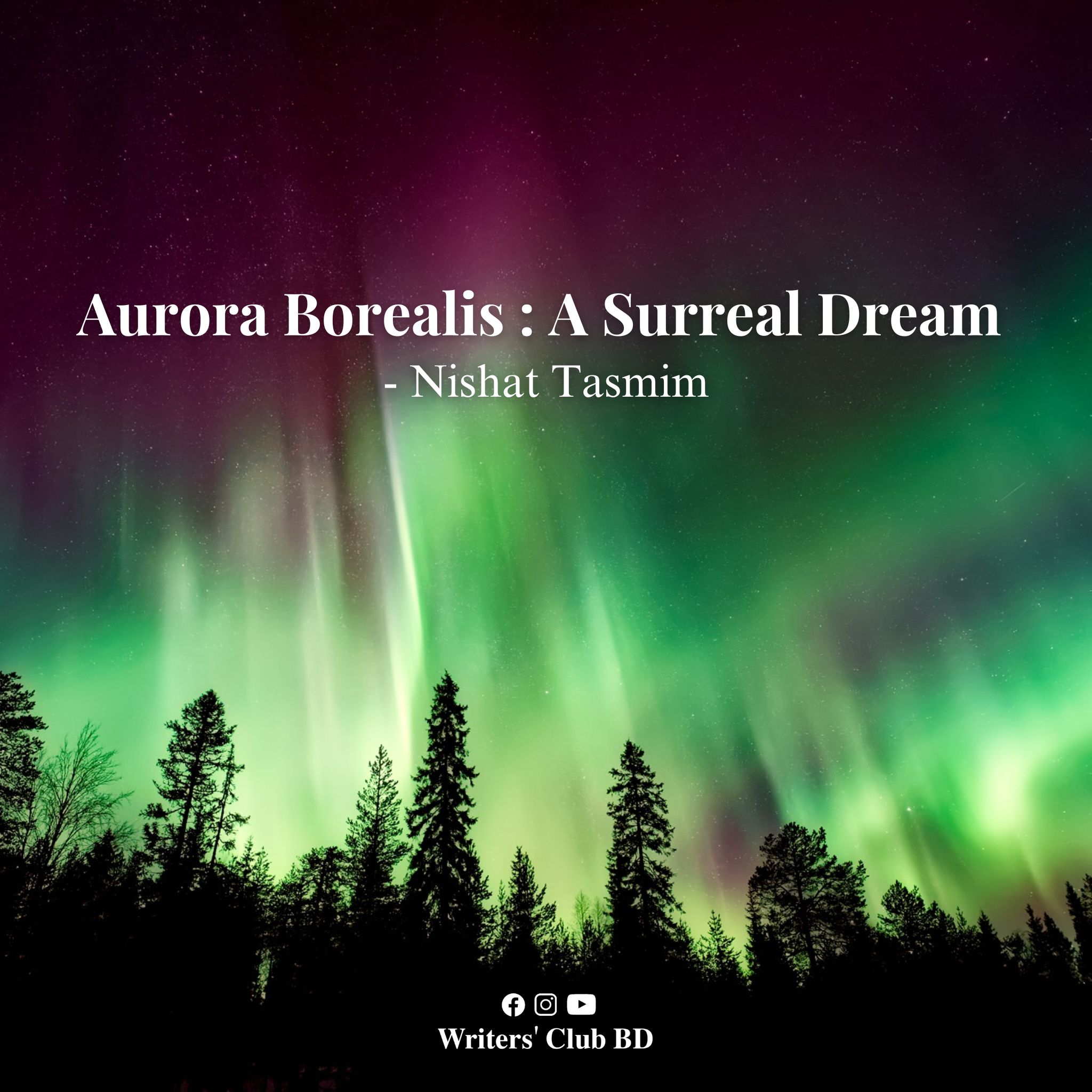
A dream, so ethereal,
Yet enchanting—
What else could it have been
Besides a beautifully woven dream?
A restless soul, long harboring
This vision, longing to be seen.
For centuries, the eyes so keen
Have awaited the majestic brilliance—
A downpour of vibrance,
Showering upon the northern hemisphere.
What a heavenly scene—
At last, the eyes have seen
~The Aurora Borealis.
The world is full of magnificent phenomena. Some remain unseen, some undiscovered, and others are so rare that only a handful of people are lucky enough to witness them. There are wonders that defy logic, appearing almost too unimaginable to be real. One such marvel is the Aurora Borealis—a divine spectacle where science meets magic, and reality feels like a reverie.
The Science Behind This Breathtaking Phenomenon :
Despite its phantasmagorical appearance, the Aurora Borealis is a well-studied scientific wonder. It occurs when charged particles from the sun collide with Earth's atmosphere, exciting gases like oxygen and nitrogen. These collisions produce mesmerizing colors, ranging from deep greens and blues to rare shades of purple and magenta. Though science explains it, the sheer visual experience remains breathtaking—a celestial twirl of prismatic lights across the abysmal night sky.
A Glimpse into History:
For centuries, the Aurora Borealis, or Northern Lights, has mesmerized those lucky enough to witness its celestial twirl. The name itself is a blend of mythology and science—Aurora, after the Roman goddess of dawn, and Borealis, meaning "north wind" in Greek. It was Galileo Galilei who first named this phenomenon in 1619, though he mistakenly believed it was caused by sunlight reflecting off the atmosphere.
Long before scientists discovered its true origins, different civilizations wove their own myths about the glowing lights. The Vikings saw them as reflections of fallen warriors, while Inuit legends spoke of spirits playing in the sky. As exploration expanded and knowledge grew, the Northern Lights transitioned from myth to mainstream fascination, capturing the imagination of travelers, artists, and scientists alike. Today, they remain one of nature’s most breathtaking spectacles, drawing people from around the world to witness their magic.
The Enchantment of the Northern Lights:
The human eye is drawn to the unseen. We are always dreaming beyond our imagination, wondering what lies beyond, what exists on the other side of the world. The Aurora Borealis is the perfect embodiment of the unworldly. It captivates the soul, leaving us in awe—unimaginable, unthinkable, almost impossible to believe. Yet, it is real. It is God’s divine creation, a phenomenon so breathtaking that the heart finds peace in witnessing it, yet struggles to believe it’s true.
It is like a photograph that can never be fully captured, a canvas painted with heavenly hues. It is like a celestial artifact—something beyond human comprehension, yet deeply yearned for. We long to see it, even if we do not know how or when we will. There is an undeniable charm in the unknown, a beauty in what remains beyond our reach. Perhaps that is why we love the Aurora Borealis so much—it reminds us that the universe holds infinite wonders, waiting to be discovered.
The Creative Influence of the Aurora Borealis:
For centuries, the aurora has captivated artists, poets, and photographers, weaving its magic into their creations. Poets like Robert Service have captured its mystery in verse, while photographers such as Göran Strand and Kwon O Chul have immortalized its glow through their lenses. The woven words, the paintbrushes, the canvases, and the lenses of the camera have all been ignited by its brilliance, for the aurora serves as a muse for creative souls.
Where to Witness This Wonder:
The Aurora Borealis is most commonly seen in high-latitude regions near the Arctic Circle. Countries like Norway, Iceland, Canada, Finland, and Sweden offer some of the best views. The best time to witness this celestial display is during the winter months when the nights are long and dark, providing the perfect canvas for the lights to paint their masterpiece.
A Bucket List for Northern Light Lovers:
For those dreaming of the perfect aurora experience, some locations stand out for different reasons:
Best for First-Timers: Tromsø, Norway, offers frequent aurora appearances, making it a great place for beginners.
For the Clearest Skies: Abisko, Sweden, is famous for its minimal cloud cover, ensuring clear views.
Best Urban Spot: Reykjavík, Iceland, lets you witness the aurora without leaving the comfort of a city.
Best for Families: Finnish Lapland provides cozy glass igloos, making it a magical experience for families.
Best Photography Spot: The Lofoten Islands, Norway, offers breathtaking landscapes perfect for capturing the aurora in all its glory.
The human soul yearns for beauty beyond imagination—fleeting moments that transcend reality. The Aurora Borealis is one such wonder, not only romanticized for its rarity but for its capacity to evoke mesmerizing emotions. Ephemeral and elusive, it may appear for mere seconds or linger for hours, painting the sky in breathtaking spectrums. If you ever find yourself beneath its gleam, embrace the moment. Whether with family, friends, or someone special, hold onto it like a cherished souvenir.
After all, the line, “I want to see the Northern Lights with you” is another way of saying “I love you.”
Nishat Tasmim
Junior Content Writer
Writer's Club Bd